Contact Info
- 6th Floor, I & M Building 2nd Ngong Avenue, Upper Hill
- +254 (0)20 2985000; +254 (0)729 111031 / +254 (0)731 000065
- info@pasgr.org
- Office Hrs: Today 9.00am to 6.00pm
Follow us


Across Africa, universities remain central to generating the knowledge needed to address complex social, governance, and development challenges. Yet the continent continues to face significant gaps in doctoral training, research capacity, and the translation of research into public policy and practice. While demand for high-quality, policy-relevant research is growing, many doctoral candidates encounter barriers ranging from limited funding and mentorship opportunities to inadequate platforms for disseminating and applying their research.
At the Partnership for African Social and Governance Research (PASGR), we believe that strengthening doctoral education means cultivating a new generation of scholars capable of generating rigorous evidence, engaging with policy actors, and contributing meaningfully to Africa’s development agenda. This commitment sits at the heart of PASGR’s mission to strengthen Africa’s capacity for social science research and advance evidence-informed policy action. Through sustained collaboration with institutions of higher learning, research organisations, governments, and development partners, PASGR continues to invest in the people, systems, and networks that make research more relevant, accessible, and impactful.
Besides producing more PhD graduates, institutions of higher learning play a unique role within the evidence-informed policymaking ecosystem. They nurture future researchers, generate new knowledge, and provide the intellectual infrastructure needed to address emerging societal challenges. However, the value of university-based research is fully realised only when it informs public discourse, shapes policy choices, and contributes to real-world solutions.
Recognising this, PASGR has prioritised collaborative approaches that strengthen the link between research production, dissemination, and policy uptake. By partnering with leading African universities, PASGR supports doctoral training that goes beyond academic excellence to embrace public scholarship, stakeholder engagement, and knowledge translation.
One of the most significant expressions of this approach is the Doctoral in Public Policy (DPP) Programme, implemented in partnership with the University of Nairobi, the University of Ibadan, and the University of Pretoria. Since its establishment in 2019 with support from the Andrew Carnegie Foundation, formerly Carnegie Corporation of New York, the programme has provided doctoral fellows with academic, financial, and professional support while fostering a vibrant network of scholars committed to advancing evidence-informed policymaking across Africa.
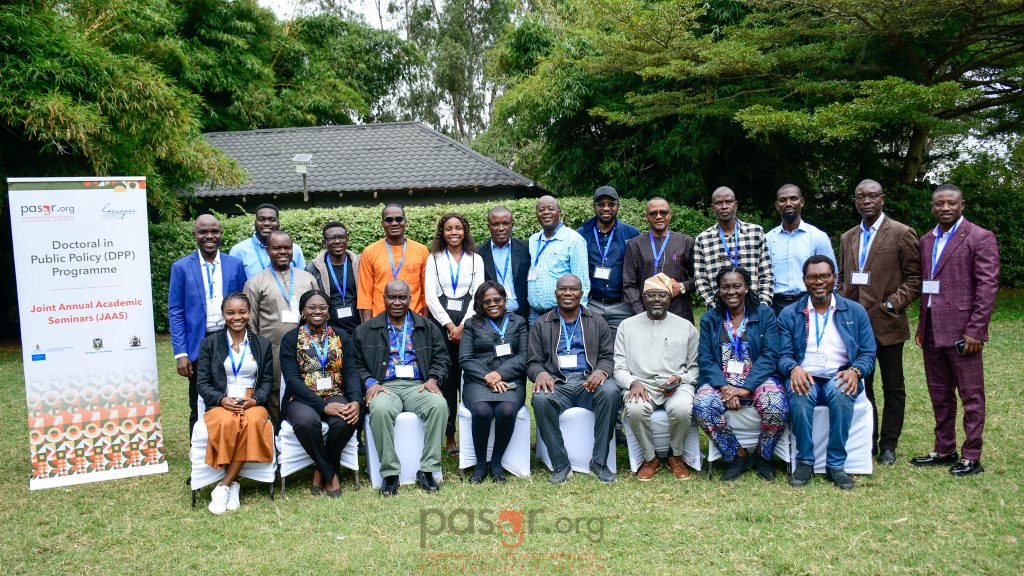
To date, the programme has produced 21 doctoral graduates who are contributing to research, teaching, policy, and leadership across the continent.
A flagship component of the DPP Programme is the Joint Annual Academic Seminar (JAAS), an annual platform that brings together doctoral fellows, supervisors, alumni, and academic leaders to exchange ideas, strengthen research quality, and enhance the societal relevance of doctoral scholarship.
The 2026 edition of JAAS will take place from 27 to 29 July 2026 in Machakos, Kenya, under the theme:
“Reimagining Doctoral Education in Africa: Innovation, Collaboration, Impact and Public Scholarship.”
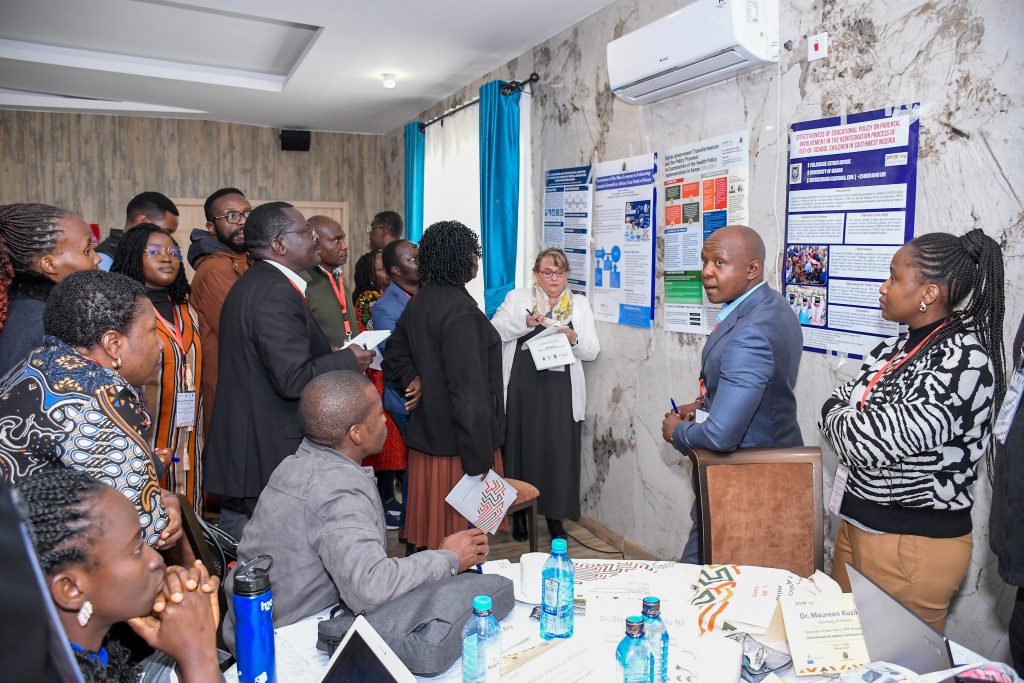
JAAS reflects PASGR’s vision of doctoral education as a catalyst for strengthening Africa’s evidence ecosystem. The academic gathering creates opportunities for doctoral researchers to present work in progress, receive expert feedback, and sharpen their analytical and methodological approaches. It also equips participants with practical skills for scholarly publishing, research communication, and responsible use of digital technologies, including artificial intelligence.
Importantly, JAAS places equal emphasis on the dissemination and uptake of research. Participants explore strategies for transforming doctoral findings into accessible and actionable knowledge products, including policy briefs, stakeholder dialogues, and public engagement initiatives. Through policy laboratory approaches inspired by PASGR’s Utafiti Sera model, doctoral scholars in this seminar will engage with policymakers, practitioners, and communities to co-create pathways for evidence use and policy influence.
Across many contexts, valuable doctoral research often remains confined to academic circles, limiting its potential contribution to policy and development outcomes. PASGR is working to change this narrative by fostering a culture of public scholarship that encourages researchers to engage beyond the university.
Through initiatives such as JAAS, scholars are supported to think critically about who can use their research, how evidence can be communicated effectively, and what partnerships are needed to achieve meaningful impact. This approach contributes to stronger connections between academia, government, civil society, and communities, helping to ensure that research informs decision-making processes at multiple levels.
Sustainable research impact depends on the strength of the networks and institutions that support them. PASGR therefore views doctoral training as part of a broader ecosystem-building effort that goes beyond support for individual researchers only.
By bringing together fellows, alumni, supervisors, universities, and policy actors, JAAS helps cultivate communities of practice that extend beyond graduation. These networks foster mentorship, collaboration, peer support, and continued engagement with pressing policy challenges facing the continent.
As Africa seeks innovative solutions to complex development issues, strengthening the connections between research, policy, and practice has never been more important. Through strategic partnerships with institutions of higher learning and other stakeholders, PASGR remains committed to advancing a future where high-quality social science research informs policy action, strengthens governance, and contributes to sustainable and inclusive development across Africa.
We believe JAAS 2026 represents an investment in the scholars, institutions, and partnerships that will shape Africa’s evidence-informed future, and hope for an impactful edition on the EIPM/DM ecosystem.